

“But I don’t WANT to!” As parents, we have all heard this lament more than once. And as an adult, I hear this little voice in my head more often than I would care to admit.
When a demanding deadline or change looms ahead (like back-to-school or tax season) our executive functions can falter and leave the emotional plea of ‘I don’t want to’ resonating very loudly in the brain.

The Science Made Simple
So why does that happen? There is a very good reason!
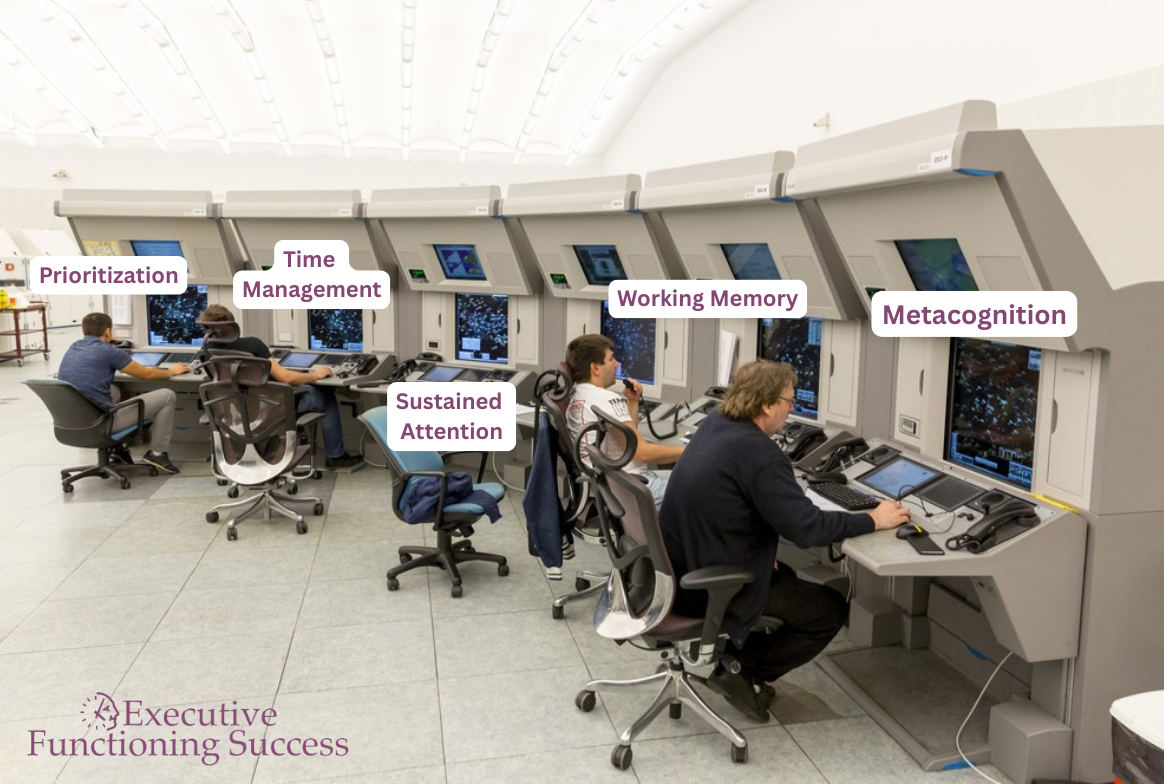
The brain’s executive functions have been described as the “air traffic controller” of the brain because they do more than tell systems to go or stop. A real air traffic controller has to account for altitude, location, distance, wind conditions, visibility, plus the number of planes in the air at a given moment.
As it relates to the brain, this metaphor perfectly describes our executive functions being directly impacted by stress, emotion, health, and the amount of tasks we are asking our brain to perform.
Your brain monitors and adjusts several variables every second at the molecular level. That’s amazing! If visibility is low, air traffic control is more difficult. And the more daunting a task seems, the lower the visibility for our brains. You cannot just add another traffic controller…you only have one!
So what to do? Here are some of my favorite strategies that I share during private Seeing My Time sessions on a regular basis.
The “Success” Strategy: Make the Invisible – Visible!
1. Normalize the resistance. The goal is always to get around that emotional “I don’t wanna” voice in your mind. In order to do that, you have to name it! When you recognize and accept the reasons for resisting, you are taking the pressure off and freeing up space to make a different choice. This blog has lots of good tips for doing just that.
2. Write it down. Knowing HOW to do something and doing it are two different things and they both require energy from the brain. Writing it down before you do it reduces the thinking energy. This leaves more resources to actually do the task at a later time. A brain dump is a great way to unload and organize your thoughts. You can also write things down in a central place as they come to you. Whatever works best for you!
 3. Make time visible. Use a planner. Seeing the whole month at one time expands your visibility into the future. Zoning in on a week view keeps you on the right flight path. The day plan keeps what you need to focus on now in sight. Analog clocks, timers and whiteboards are also great ways to make time visible. We have a number of them linked on our Cool Tools page.
4. Hold family meetings. Meeting as a family to do your planning together helps get past that feeling of dread and gets everyone on the same page. Have fun with it – order a pizza, give everyone tasks and talk about your goals for the month. Here are some great tips for how to hold a successful family meeting.
Remember to take care of your personal air traffic controller. It’s doing the best it can! Learn more about how executive functioning develops, becomes stronger, and how to support it when it is stuck. Meet with Julie Miller or sign up to hear my interview at Getting the Brain on Board.
Happy September!